%22%3E%3Cpath%20fill%3D%22%231B5FA8%22%20d%3D%22M154.33%2063.8605C154.735%2063.8286%20155.221%2063.7839%20155.625%2063.787L334.96%2063.8631C346.512%2063.8626%20358.302%2063.1032%20369.538%2065.4435C412.342%2074.3585%20441.754%20110.631%20441.969%20154.538L442.007%20338.766C442.011%20351.632%20442.745%20365.236%20440.098%20377.848C432.091%20415.993%20397.028%20446.925%20357.438%20447.5C352.937%20447.703%20347.612%20447.506%20343.015%20447.504L176.886%20447.501C166.067%20447.507%20153.794%20448.189%20143.27%20446.337C104.089%20439.44%2073.0083%20404.626%2070.3225%20364.977C69.8948%20358.664%2069.9981%20352.265%2070.0021%20345.936L70.003%20179.365C70.0032%20165.657%2069.1366%20150.142%2071.6172%20136.77C79.158%2096.1199%20113.607%2066.612%20154.33%2063.8605Z%22%3E%3C%2Fpath%3E%3Cpath%20fill%3D%22%23F5D272%22%20d%3D%22M316.579%20164.404C315.533%20183.395%20307.048%20187.407%20289.126%20186.228C263.967%20184.642%20259.585%20180.977%20259.931%20155.786C260.062%20146.244%20259.198%20136.524%20267.403%20129.82C276.236%20122.603%20291.211%20126.035%20301.917%20127.184L327.8%20129.911C332.932%20130.441%20338.356%20130.668%20343.393%20131.423C367.21%20134.991%20373.826%20152.494%20377.865%20172.534L390.114%20231.533C393.545%20247.778%20395.334%20261.24%20393.313%20277.75C385.979%20338.198%20326.007%20376.487%20267.73%20368.039C253.996%20366.048%20241.158%20362.142%20228.428%20357.627C206.665%20349.907%20203.927%20342.75%20185.807%20360.778L173.942%20372.714C171.207%20375.502%20167.735%20379.356%20164.373%20381.318C156.923%20385.667%20146.907%20383.455%20143.728%20374.796C141.549%20369.589%20139.051%20364.635%20136.704%20359.506L126.446%20336.646C124.243%20331.79%20119.437%20321.947%20118.502%20317.455C112.091%20286.661%20139.186%20254.636%20168.616%20247.718C191.697%20242.293%20210.044%20251.652%20227.874%20265.032C235.171%20270.508%20244.529%20263.482%20252.035%20262.111C274.15%20258.074%20290.362%20270.577%20308.237%20281.418C315.783%20285.995%20324.159%20290.62%20331.547%20295.39C328.979%20292.255%20324.945%20288.568%20322.042%20285.458C307.09%20269.441%20309.66%20248.659%20320.144%20230.921C324.018%20224.368%20329.978%20217.084%20333.181%20210.357C337.353%20201.595%20341.557%20176.682%20334.235%20168.63C330.249%20164.247%20322.304%20164.696%20316.579%20164.404Z%22%3E%3C%2Fpath%3E%3C%2Fg%3E%3C%2Fsvg%3E)
Hack Squat
- Quads
- Calves
- Glutes
- Hamstrings
Equipment: Machine
New to this
Your first hack squat
What weight should I start with on the hack squat?
Start with the empty sled, which runs 60 to 100 lb depending on the machine, then add a 25 lb plate per side. The back pad supports you, so most people move up faster here than on a free-weight squat. You have it right when you can reach parallel with your heels flat.
What usually goes wrong on the hack squat?
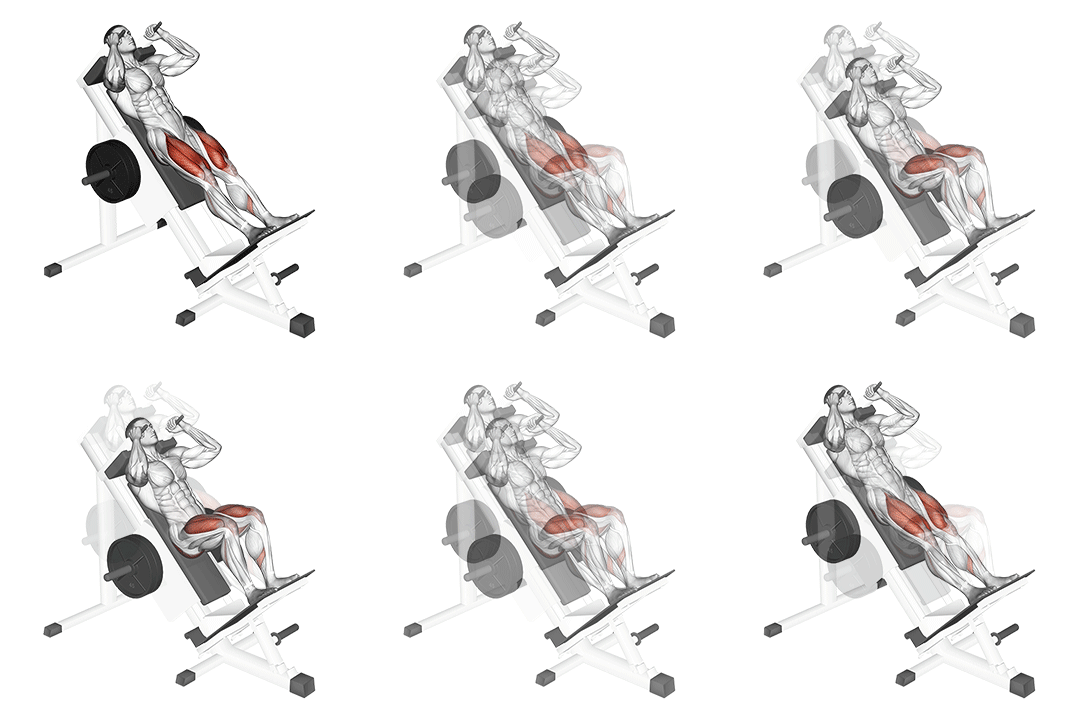
Set your feet shoulder-width in the middle of the platform, back and hips flat against the pad.
Unrack the sled and take a breath before you descend.
Lower until your thighs are level with the platform, knees tracking over your toes.
Drive through your whole foot to stand back up, stopping short of locking the knees.
You should feel this in the quads.
Most common mistake: placing the feet too low on the platform, which pushes the knees far past the toes and loads the joint. Move your feet up an inch or two if your knees ache.
If the hack squat is taken
The Split Squat with Dumbbells works one leg at a time, so far less total load is needed.
The Leg Press is a similar supported squat pattern with a different back angle.
How to do it
Place the back of your torso against the back pad of the machine and hook your shoulders under the shoulder pads provided.
Position your legs in the platform using a shoulder width medium stance with the toes slightly pointed out.
Tip: Keep your head up at all times and also maintain the back on the pad at all times.
Place your arms on the side handles of the machine and disengage the safety bars (which on most designs is done by moving the side handles from a facing front position to a diagonal position).
Now straighten your legs without locking the knees. This will be your starting position. (Note: For the purposes of this discussion we will use the medium stance described above which targets overall development; however you can choose any of the three stances described in the foot positioning section).
Begin to slowly lower the unit by bending the knees as you maintain a straight posture with the head up (back on the pad at all times). Continue down until the angle between the upper leg and the calves becomes slightly less than 90-degrees (which is the point in which the upper legs are below parallel to the floor). Inhale as you perform this portion of the movement.
Tip: If you performed the exercise correctly, the front of the knees should make an imaginary straight line with the toes that is perpendicular to the front. If your knees are past that imaginary line (if they are past your toes) then you are placing undue stress on the knee and the exercise has been performed incorrectly.
Begin to raise the unit as you exhale by pushing the floor with mainly with the heel of your foot as you straighten the legs again and go back to the starting position.
Repeat for the recommended amount of repetitions.