%22%3E%3Cpath%20fill%3D%22%231B5FA8%22%20d%3D%22M154.33%2063.8605C154.735%2063.8286%20155.221%2063.7839%20155.625%2063.787L334.96%2063.8631C346.512%2063.8626%20358.302%2063.1032%20369.538%2065.4435C412.342%2074.3585%20441.754%20110.631%20441.969%20154.538L442.007%20338.766C442.011%20351.632%20442.745%20365.236%20440.098%20377.848C432.091%20415.993%20397.028%20446.925%20357.438%20447.5C352.937%20447.703%20347.612%20447.506%20343.015%20447.504L176.886%20447.501C166.067%20447.507%20153.794%20448.189%20143.27%20446.337C104.089%20439.44%2073.0083%20404.626%2070.3225%20364.977C69.8948%20358.664%2069.9981%20352.265%2070.0021%20345.936L70.003%20179.365C70.0032%20165.657%2069.1366%20150.142%2071.6172%20136.77C79.158%2096.1199%20113.607%2066.612%20154.33%2063.8605Z%22%3E%3C%2Fpath%3E%3Cpath%20fill%3D%22%23F5D272%22%20d%3D%22M316.579%20164.404C315.533%20183.395%20307.048%20187.407%20289.126%20186.228C263.967%20184.642%20259.585%20180.977%20259.931%20155.786C260.062%20146.244%20259.198%20136.524%20267.403%20129.82C276.236%20122.603%20291.211%20126.035%20301.917%20127.184L327.8%20129.911C332.932%20130.441%20338.356%20130.668%20343.393%20131.423C367.21%20134.991%20373.826%20152.494%20377.865%20172.534L390.114%20231.533C393.545%20247.778%20395.334%20261.24%20393.313%20277.75C385.979%20338.198%20326.007%20376.487%20267.73%20368.039C253.996%20366.048%20241.158%20362.142%20228.428%20357.627C206.665%20349.907%20203.927%20342.75%20185.807%20360.778L173.942%20372.714C171.207%20375.502%20167.735%20379.356%20164.373%20381.318C156.923%20385.667%20146.907%20383.455%20143.728%20374.796C141.549%20369.589%20139.051%20364.635%20136.704%20359.506L126.446%20336.646C124.243%20331.79%20119.437%20321.947%20118.502%20317.455C112.091%20286.661%20139.186%20254.636%20168.616%20247.718C191.697%20242.293%20210.044%20251.652%20227.874%20265.032C235.171%20270.508%20244.529%20263.482%20252.035%20262.111C274.15%20258.074%20290.362%20270.577%20308.237%20281.418C315.783%20285.995%20324.159%20290.62%20331.547%20295.39C328.979%20292.255%20324.945%20288.568%20322.042%20285.458C307.09%20269.441%20309.66%20248.659%20320.144%20230.921C324.018%20224.368%20329.978%20217.084%20333.181%20210.357C337.353%20201.595%20341.557%20176.682%20334.235%20168.63C330.249%20164.247%20322.304%20164.696%20316.579%20164.404Z%22%3E%3C%2Fpath%3E%3C%2Fg%3E%3C%2Fsvg%3E)
Seated Bent-Over Rear Delt Raise
- Shoulders
Equipment: Dumbbell
New to this
Your first seated bent-over rear delt raise
What weight should I start with on the seated bent-over rear delt raise?
Start with 5 to 10 lb dumbbells. Almost everyone picks up too much here and turns it into a row. You have it right when you can hold the top position for a full second with your arms nearly straight.
What usually goes wrong on the seated bent-over rear delt raise?
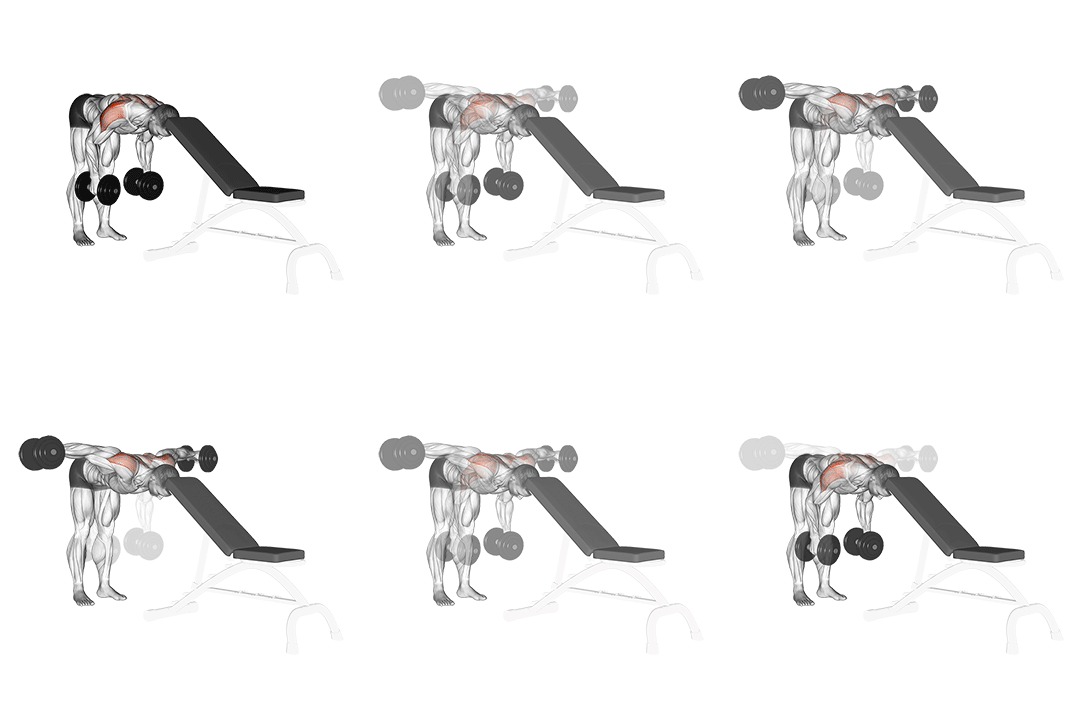
Sit on the end of a bench with your feet flat and lean your chest toward your thighs.
Let the dumbbells hang under your knees, palms facing each other, elbows barely bent.
Raise your arms out to the sides until they are level with your shoulders.
Lower slowly, keeping your chest down against your thighs the whole time.
You should feel this behind the shoulders. Mid-back squeeze means your elbows bent and it became a row.
Most common mistake: sitting up as the set gets hard. Keep your chest on your thighs. If you cannot, the weight is too heavy.
If the light dumbbells are all gone
The Cable Rear Delt Fly has steadier tension and is easier to load in small jumps.
The Face Pull is a cable option that trains the same area from a different angle.
How to do it
Place a couple of dumbbells looking forward in front of a flat bench.
Sit on the end of the bench with your legs together and the dumbbells behind your calves.
Bend at the waist while keeping the back straight in order to pick up the dumbbells. The palms of your hands should be facing each other as you pick them. This will be your starting position.
Keeping your torso forward and stationary, and the arms slightly bent at the elbows, lift the dumbbells straight to the side until both arms are parallel to the floor. Exhale as you lift the weights. (Note: avoid swinging the torso or bringing the arms back as opposed to the side.)
After a one second contraction at the top, slowly lower the dumbbells back to the starting position.
Repeat for the recommended amount of repetitions.