%22%3E%3Cpath%20fill%3D%22%231B5FA8%22%20d%3D%22M154.33%2063.8605C154.735%2063.8286%20155.221%2063.7839%20155.625%2063.787L334.96%2063.8631C346.512%2063.8626%20358.302%2063.1032%20369.538%2065.4435C412.342%2074.3585%20441.754%20110.631%20441.969%20154.538L442.007%20338.766C442.011%20351.632%20442.745%20365.236%20440.098%20377.848C432.091%20415.993%20397.028%20446.925%20357.438%20447.5C352.937%20447.703%20347.612%20447.506%20343.015%20447.504L176.886%20447.501C166.067%20447.507%20153.794%20448.189%20143.27%20446.337C104.089%20439.44%2073.0083%20404.626%2070.3225%20364.977C69.8948%20358.664%2069.9981%20352.265%2070.0021%20345.936L70.003%20179.365C70.0032%20165.657%2069.1366%20150.142%2071.6172%20136.77C79.158%2096.1199%20113.607%2066.612%20154.33%2063.8605Z%22%3E%3C%2Fpath%3E%3Cpath%20fill%3D%22%23F5D272%22%20d%3D%22M316.579%20164.404C315.533%20183.395%20307.048%20187.407%20289.126%20186.228C263.967%20184.642%20259.585%20180.977%20259.931%20155.786C260.062%20146.244%20259.198%20136.524%20267.403%20129.82C276.236%20122.603%20291.211%20126.035%20301.917%20127.184L327.8%20129.911C332.932%20130.441%20338.356%20130.668%20343.393%20131.423C367.21%20134.991%20373.826%20152.494%20377.865%20172.534L390.114%20231.533C393.545%20247.778%20395.334%20261.24%20393.313%20277.75C385.979%20338.198%20326.007%20376.487%20267.73%20368.039C253.996%20366.048%20241.158%20362.142%20228.428%20357.627C206.665%20349.907%20203.927%20342.75%20185.807%20360.778L173.942%20372.714C171.207%20375.502%20167.735%20379.356%20164.373%20381.318C156.923%20385.667%20146.907%20383.455%20143.728%20374.796C141.549%20369.589%20139.051%20364.635%20136.704%20359.506L126.446%20336.646C124.243%20331.79%20119.437%20321.947%20118.502%20317.455C112.091%20286.661%20139.186%20254.636%20168.616%20247.718C191.697%20242.293%20210.044%20251.652%20227.874%20265.032C235.171%20270.508%20244.529%20263.482%20252.035%20262.111C274.15%20258.074%20290.362%20270.577%20308.237%20281.418C315.783%20285.995%20324.159%20290.62%20331.547%20295.39C328.979%20292.255%20324.945%20288.568%20322.042%20285.458C307.09%20269.441%20309.66%20248.659%20320.144%20230.921C324.018%20224.368%20329.978%20217.084%20333.181%20210.357C337.353%20201.595%20341.557%20176.682%20334.235%20168.63C330.249%20164.247%20322.304%20164.696%20316.579%20164.404Z%22%3E%3C%2Fpath%3E%3C%2Fg%3E%3C%2Fsvg%3E)
Standing Dumbbell Upright Row
- Traps
- Biceps
- Shoulders
Equipment: Dumbbell
New to this
Your first standing dumbbell upright row
What weight should I start with on the standing dumbbell upright row?
Start with 10 to 15 lb dumbbells. This one goes wrong under heavy load more than most, so keep it light and stop the set when form slips. You have it right if you can stop at chest height with your elbows above your hands.
What usually goes wrong on the standing dumbbell upright row?
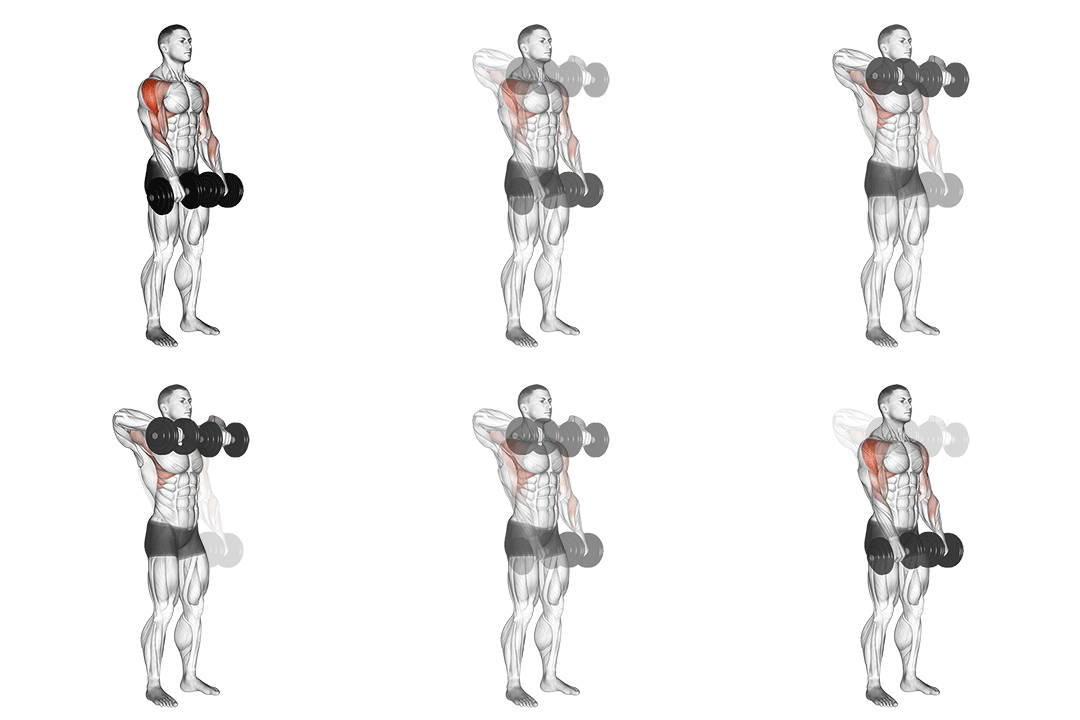
Stand with a dumbbell in each hand, palms facing your thighs, arms straight.
Pull the dumbbells straight up close to your body, leading with the elbows.
Stop when your hands reach chest height and your elbows are level with your shoulders.
Lower under control to straight arms.
You should feel this in the side delts and traps. Pinching inside the shoulder means you pulled too high.
Most common mistake: pulling all the way to the chin. Stop at chest height. The last few inches are where shoulders get irritated.
If the dumbbells you want are gone
The Side Lateral Raise hits the side delts with less shoulder rotation, so it is the safer option.
The Barbell Shrug trains the trap half of the movement with heavier load.
How to do it
Grasp a dumbbell in each hand with a pronated (palms forward) grip that is slightly less than shoulder width. The dumbbells should be resting on top of your thighs. Your arms should be extended with a slight bend at the elbows and your back should be straight. This will be your starting position.
Use your side shoulders to lift the dumbbells as you exhale. The dumbbells should be close to the body as you move it up and the elbows should drive the motion. Continue to lift them until they nearly touch your chin.
Tip: Your elbows should drive the motion. As you lift the dumbbells, your elbows should always be higher than your forearms. Also, keep your torso stationary and pause for a second at the top of the movement.
Lower the dumbbells back down slowly to the starting position. Inhale as you perform this portion of the movement.
Repeat for the recommended amount of repetitions.