%22%3E%3Cpath%20fill%3D%22%231B5FA8%22%20d%3D%22M154.33%2063.8605C154.735%2063.8286%20155.221%2063.7839%20155.625%2063.787L334.96%2063.8631C346.512%2063.8626%20358.302%2063.1032%20369.538%2065.4435C412.342%2074.3585%20441.754%20110.631%20441.969%20154.538L442.007%20338.766C442.011%20351.632%20442.745%20365.236%20440.098%20377.848C432.091%20415.993%20397.028%20446.925%20357.438%20447.5C352.937%20447.703%20347.612%20447.506%20343.015%20447.504L176.886%20447.501C166.067%20447.507%20153.794%20448.189%20143.27%20446.337C104.089%20439.44%2073.0083%20404.626%2070.3225%20364.977C69.8948%20358.664%2069.9981%20352.265%2070.0021%20345.936L70.003%20179.365C70.0032%20165.657%2069.1366%20150.142%2071.6172%20136.77C79.158%2096.1199%20113.607%2066.612%20154.33%2063.8605Z%22%3E%3C%2Fpath%3E%3Cpath%20fill%3D%22%23F5D272%22%20d%3D%22M316.579%20164.404C315.533%20183.395%20307.048%20187.407%20289.126%20186.228C263.967%20184.642%20259.585%20180.977%20259.931%20155.786C260.062%20146.244%20259.198%20136.524%20267.403%20129.82C276.236%20122.603%20291.211%20126.035%20301.917%20127.184L327.8%20129.911C332.932%20130.441%20338.356%20130.668%20343.393%20131.423C367.21%20134.991%20373.826%20152.494%20377.865%20172.534L390.114%20231.533C393.545%20247.778%20395.334%20261.24%20393.313%20277.75C385.979%20338.198%20326.007%20376.487%20267.73%20368.039C253.996%20366.048%20241.158%20362.142%20228.428%20357.627C206.665%20349.907%20203.927%20342.75%20185.807%20360.778L173.942%20372.714C171.207%20375.502%20167.735%20379.356%20164.373%20381.318C156.923%20385.667%20146.907%20383.455%20143.728%20374.796C141.549%20369.589%20139.051%20364.635%20136.704%20359.506L126.446%20336.646C124.243%20331.79%20119.437%20321.947%20118.502%20317.455C112.091%20286.661%20139.186%20254.636%20168.616%20247.718C191.697%20242.293%20210.044%20251.652%20227.874%20265.032C235.171%20270.508%20244.529%20263.482%20252.035%20262.111C274.15%20258.074%20290.362%20270.577%20308.237%20281.418C315.783%20285.995%20324.159%20290.62%20331.547%20295.39C328.979%20292.255%20324.945%20288.568%20322.042%20285.458C307.09%20269.441%20309.66%20248.659%20320.144%20230.921C324.018%20224.368%20329.978%20217.084%20333.181%20210.357C337.353%20201.595%20341.557%20176.682%20334.235%20168.63C330.249%20164.247%20322.304%20164.696%20316.579%20164.404Z%22%3E%3C%2Fpath%3E%3C%2Fg%3E%3C%2Fsvg%3E)
The short version
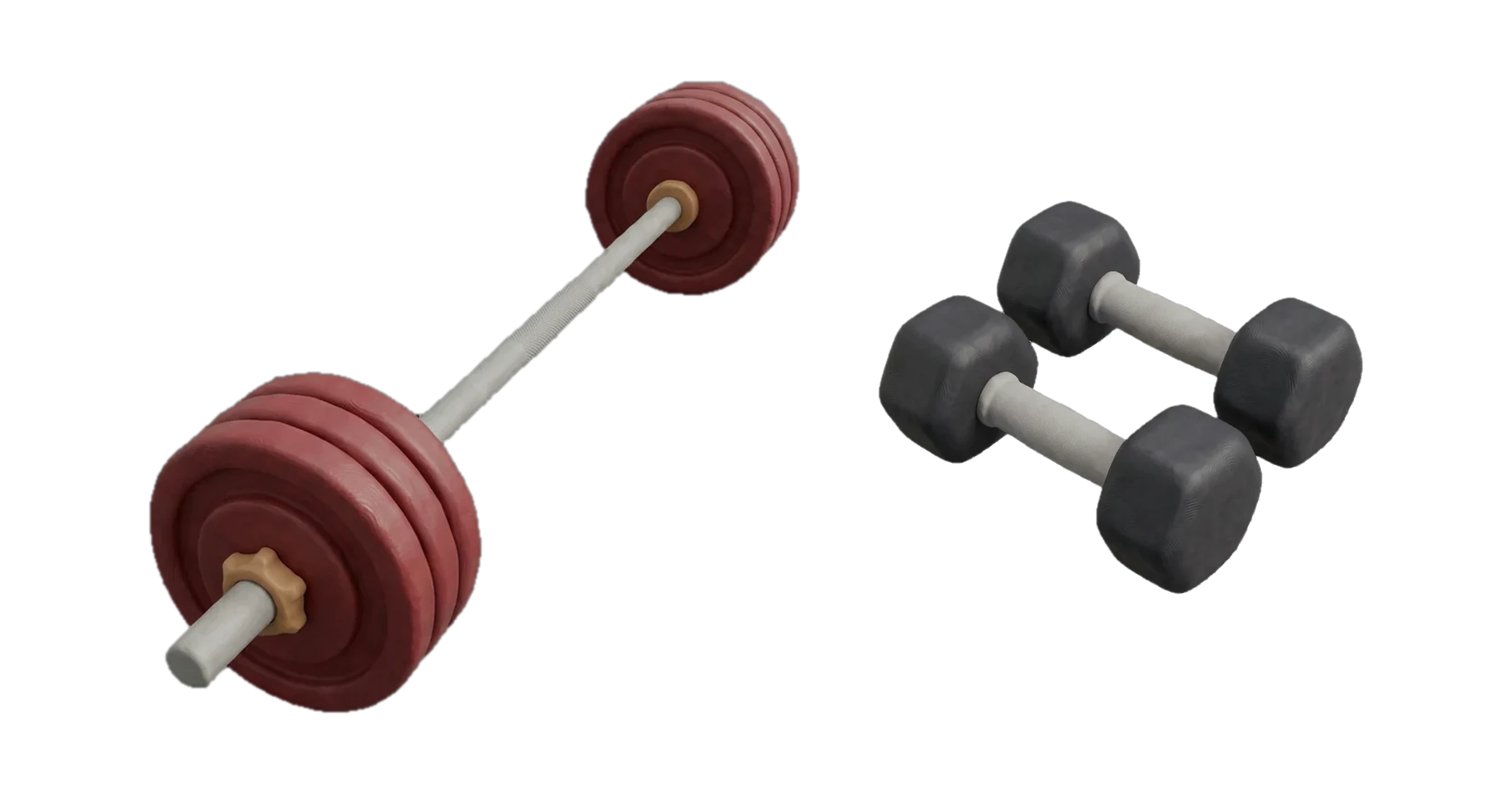
Swap the barbell bench press for the incline dumbbell press. Dumbbells let each arm move on its own path, so your shoulder isn't locked into the width and angle the bar decides for it.
If the incline still hurts, use a chest press machine and shorten the range so you stop above the painful spot.
Add weight when you can do 3 sets of 10 with control and about 2 reps left in you at the end of each set.
If the pain has lasted more than 2 or 3 weeks, wakes you up at night, or comes with weakness or numbness down your arm, book a physio before you keep pressing. This guide is about training around a cranky shoulder, not diagnosing one.
What the bar decides for you
Grip a barbell and four things get fixed at once. Your hands sit at one width for the whole set. Your wrists can't rotate, because both hands are attached to the same rigid object. Your elbows travel wherever the bar path puts them. And the bar stops at your chest every single rep, at the same depth, whether your shoulder feels fine that day or not.
Your shoulder has to work with all of that. If the width or the depth happens to be somewhere your joint doesn't like, there's no room to adjust mid-set.
Dumbbells give all four back. Your hands can rotate to a neutral grip. Each arm finds its own line. You can bring the weights closer together at the top or drift wider at the bottom. You decide how deep you go and you can stop 3 inches short on your left side if that's what feels good.
Plenty of people bench for 20 years and never have a shoulder problem. If that's you, keep benching. This is for people whose shoulder complains every time they set up under a bar.
One honest caveat
No press is universally safer than another. There's no research showing incline dumbbells beat flat barbell for shoulder health, and I'd be careful with anyone who tells you otherwise.
What matters is that you find a pressing variation you can do without pain, then load it consistently for months. A comfortable press you train hard beats a "correct" press you avoid or grind through.
Some people find flat dumbbells fine and inclines irritating. Try both.
Setting up the incline dumbbell press
Set the bench to about 30 degrees. Most adjustable benches have a notch right around there. Steeper angles shift work onto the front of the shoulder, which is often the part that already hurts.
Getting the dumbbells up is the part beginners fumble. Sit on the bench with a dumbbell standing on each thigh. Kick one knee up and lie back at the same time, letting the momentum carry the weight to your shoulder. Repeat with the other side. To finish, sit up and let them come back down to your thighs.
Once you're set:
- Keep your elbows about 45 degrees out from your torso. Flaring them straight out to 90 puts your shoulder in the position that bothers most people.
- Turn your palms slightly toward each other instead of facing straight forward. This alone fixes the pain for a lot of people.
- Lower until you feel a stretch across your chest, then press. If a certain depth pinches, stop above it. A shorter pain-free range you can add weight to over months is worth more than a full range you can only do once.
Starting weight
Start with 15 lb dumbbells. If 15 feels like a fight on the first set, use 10.
Too heavy if you can't lower the weights under control for a slow 2 count, or if your last rep looks nothing like your first.
Add 5 lb per hand when you hit 3 sets of 10 with about 2 reps left in the tank on each set. That's roughly every 2 to 4 weeks early on, then slower.
The machine chest press
Machines have a reputation problem among people who lift, and it's undeserved for beginners with a sore shoulder.
You don't have to balance anything, so you can pay attention to how your shoulder feels instead of where the weights are drifting. You can push closer to failure without a spotter. And you can't drop it on yourself.
The handle height is adjustable on most machines through the seat. Move the seat up and the handles sit lower on your chest, which changes the angle at your shoulder. Spend one session trying two or three seat heights and use whichever feels best.
Two sets of 12 to 15 after your dumbbell work is plenty.
Decline pressing
Declines put your shoulder in less flexion than flat or incline pressing, which is why some people with shoulder pain find them the most comfortable press in the gym.
The catch is that most commercial gyms have 1 decline bench, or none. A decline chest press machine works the same way if your gym has one. If neither exists, skip it. You aren't missing anything you can't get elsewhere.
A week that works
Two pressing days:
Day A: Incline dumbbell press, 3 sets of 8 to 10. Machine chest press, 2 sets of 12.
Day B: Incline dumbbell press, 3 sets of 10 to 12 with a lighter weight. Decline or machine press, 2 sets of 12.
That's it. Your chest doesn't know what implement is producing the tension. It responds to hard sets taken near failure, and dumbbells produce those fine.
My shoulder
I benched through shoulder pain for about a year before I did anything about it. The pain showed up in the bottom of the rep, faded during the day, and came back the next time I pressed. Classic pattern for ignoring it.
I ended up seeing a physio. What helped was a few months of loading the shoulder in positions I'd been avoiding, plus dropping the barbell bench entirely. I haven't done a barbell bench press in about 3 years. Incline dumbbells are my only main press now, with machine work after, and the shoulder hasn't bothered me since.
I'm one person and this isn't a treatment plan. What I'd pass on: the physio was worth the money, and giving up an exercise I thought I needed cost me nothing.
Keeping track of it
Swapping exercises only works if you can see whether the new one is progressing. Two months of incline dumbbell press should show up as more weight or more reps, and it's hard to judge that from memory.
I built LiftCamp for this. Every exercise has a starting weight, a note on what to do when it feels too heavy, and substitution options when a movement bothers you. It logs your sets so the progression is visible instead of guessed at. It's free and runs in your browser.
A notebook works too. Write down the weight and the reps every session, and you'll have the same information.
When to see someone
Book an appointment if:
- The pain has been there longer than 2 or 3 weeks and isn't improving
- It wakes you up or hurts when you lie on that side
- Reaching overhead or behind your back hurts in daily life, not just in the gym
- The arm feels weak, or you get numbness or tingling
- There was a specific moment it went, like a pop or a heavy rep that felt wrong
A free workout tracker for your phone
LiftCamp remembers every set you log, so next week it shows you what you lifted last time and you pick the weight in 2 seconds. Add it to your home screen and it opens like an app. No app store, no cost.
No card, no app store. Works in your browser.
More guides
- A beginner full-body workout, three days a weekTwo workouts, alternated. Four exercises each, about 45 minutes, and a plan for adding weight.
- How to pick your starting weightThe short version, then the details, for every kind of equipment in the gym.
- Progressive overload for beginners: how to do itWhat progressive overload is, why it works, and the reps-then-weight method for barbells, machines, dumbbells and bodyweight.