%22%3E%3Cpath%20fill%3D%22%231B5FA8%22%20d%3D%22M154.33%2063.8605C154.735%2063.8286%20155.221%2063.7839%20155.625%2063.787L334.96%2063.8631C346.512%2063.8626%20358.302%2063.1032%20369.538%2065.4435C412.342%2074.3585%20441.754%20110.631%20441.969%20154.538L442.007%20338.766C442.011%20351.632%20442.745%20365.236%20440.098%20377.848C432.091%20415.993%20397.028%20446.925%20357.438%20447.5C352.937%20447.703%20347.612%20447.506%20343.015%20447.504L176.886%20447.501C166.067%20447.507%20153.794%20448.189%20143.27%20446.337C104.089%20439.44%2073.0083%20404.626%2070.3225%20364.977C69.8948%20358.664%2069.9981%20352.265%2070.0021%20345.936L70.003%20179.365C70.0032%20165.657%2069.1366%20150.142%2071.6172%20136.77C79.158%2096.1199%20113.607%2066.612%20154.33%2063.8605Z%22%3E%3C%2Fpath%3E%3Cpath%20fill%3D%22%23F5D272%22%20d%3D%22M316.579%20164.404C315.533%20183.395%20307.048%20187.407%20289.126%20186.228C263.967%20184.642%20259.585%20180.977%20259.931%20155.786C260.062%20146.244%20259.198%20136.524%20267.403%20129.82C276.236%20122.603%20291.211%20126.035%20301.917%20127.184L327.8%20129.911C332.932%20130.441%20338.356%20130.668%20343.393%20131.423C367.21%20134.991%20373.826%20152.494%20377.865%20172.534L390.114%20231.533C393.545%20247.778%20395.334%20261.24%20393.313%20277.75C385.979%20338.198%20326.007%20376.487%20267.73%20368.039C253.996%20366.048%20241.158%20362.142%20228.428%20357.627C206.665%20349.907%20203.927%20342.75%20185.807%20360.778L173.942%20372.714C171.207%20375.502%20167.735%20379.356%20164.373%20381.318C156.923%20385.667%20146.907%20383.455%20143.728%20374.796C141.549%20369.589%20139.051%20364.635%20136.704%20359.506L126.446%20336.646C124.243%20331.79%20119.437%20321.947%20118.502%20317.455C112.091%20286.661%20139.186%20254.636%20168.616%20247.718C191.697%20242.293%20210.044%20251.652%20227.874%20265.032C235.171%20270.508%20244.529%20263.482%20252.035%20262.111C274.15%20258.074%20290.362%20270.577%20308.237%20281.418C315.783%20285.995%20324.159%20290.62%20331.547%20295.39C328.979%20292.255%20324.945%20288.568%20322.042%20285.458C307.09%20269.441%20309.66%20248.659%20320.144%20230.921C324.018%20224.368%20329.978%20217.084%20333.181%20210.357C337.353%20201.595%20341.557%20176.682%20334.235%20168.63C330.249%20164.247%20322.304%20164.696%20316.579%20164.404Z%22%3E%3C%2Fpath%3E%3C%2Fg%3E%3C%2Fsvg%3E)
The short version
Pick up something heavy in each hand and walk. Two dumbbells are the obvious choice. Two water jugs, two buckets with sand in them, or a suitcase in each hand all work the same way.
Aim for 30 to 40 seconds of walking per set, 3 or 4 sets. Stop when your grip is about to fail, not after it has.
If you run out of floor, walk back and forth, or stand still and hold. A stationary hold trains the same thing.
What it actually trains
The farmers walk is the simplest exercise in the gym and one of the few that trains several things at once without any technique to learn.
Your grip gives out first, which is the point. Grip strength is the limiting factor in rows, pull ups and deadlifts for a lot of beginners, and carrying heavy things is the fastest way to fix it.
Your traps and upper back hold your shoulders in place against the pull. Your abs and obliques stop you tipping sideways. Your legs move you. It ends up being one of the more tiring things you can do in 40 seconds.
It also carries over to real life more directly than almost anything else. Groceries, luggage, a toddler in a car seat.
What to carry
Dumbbells or kettlebells if you have them. Easiest to hold, easy to progress, easy to put down.
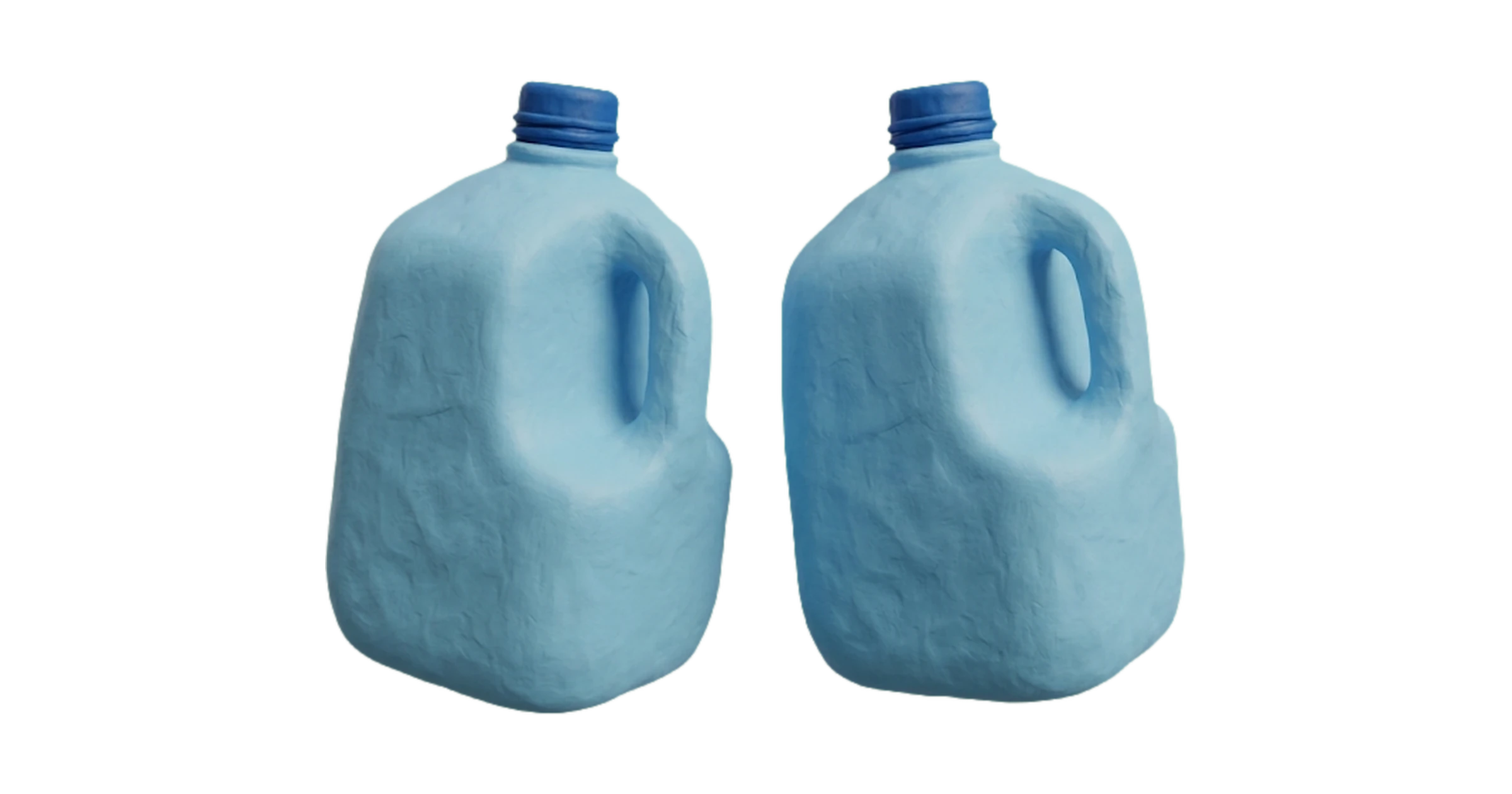
Water jugs. A 5 gallon jug is about 42 lb full. The handle is thin, which makes it harder on the grip than the same weight in a dumbbell, and you can pour some out to adjust.
Buckets with sand or gravel. Cheap and adjustable. A 5 gallon bucket filled with sand lands around 60 to 70 lb, so start with it half full.
A loaded suitcase or a backpack in each hand. Whatever you own that has a handle and can take weight. Books work.
A sandbag or a heavy shopping bag. Awkward loads shift as you move, which makes your core work harder for the same weight.
How heavy
Heavy enough that your grip is fading by 30 seconds. If you can walk for 2 minutes, it is too light and you are doing cardio.
A rough starting point: something around a quarter of your bodyweight in each hand. If you weigh 160 lb, try 40 lb per side. Adjust from there on the first set rather than planning it out.
Getting to half your bodyweight per hand is a reasonable medium term goal, and at that point most people find their grip has stopped being the weak link in everything else they do.
How far, and for how long
Time is easier to manage at home than distance. Set a 30 second timer and walk until it goes.
Three or four sets, with 90 seconds to 2 minutes of rest between them. Your grip needs longer to recover than you expect, and a second set with a half recovered grip is a wasted set.
Twice a week is plenty. Put it at the end of a session, because doing it first will leave your grip too fried for rows and pulldowns.
If you only have one room
You do not need a long hallway. Three options, all of which work.
Shuttle walks. Pick two points 15 or 20 feet apart and go back and forth until the timer goes. The turns add a bit of difficulty, since changing direction under load asks more of your core.
Static holds. Stand still and hold. Your grip, traps and core all still get the work. Only your legs miss out, and they were the least important part here.
Suitcase carry. Weight in one hand only. Your obliques on the opposite side have to fight the lean, so it is harder on the core at half the total load. Useful when you only own one heavy object.
How to carry it
Stand tall. The instinct under load is to hunch, and hunching is what makes your neck sore the next day.
Pull your shoulders back and down slightly, like you are trying to tuck your shoulder blades into your back pockets. Chest up, eyes forward rather than at your feet.
Take shorter steps than you normally would. Long strides make you sway side to side, and the sway is what tips over a heavy carry.
Breathe. It sounds obvious, but people hold their breath for the entire walk and wonder why 30 seconds felt like a minute.
To finish, put the weights down under control by bending your knees and hips, not by bending your back and dropping them.
Making it harder over time
In order of what to change first:
Add time. Go from 30 seconds to 45 at the same weight. Easiest change and it needs no new equipment.
Add weight. Once you can do 45 seconds comfortably, go heavier and drop back to 30.
Make the handle thicker. Wrap a towel around the handle. This makes the same weight dramatically harder to hold and is the cheapest way to progress once you run out of heavy objects.
Stop using straps if you started with them. Straps let you carry more, but they take your grip out of the exercise, which was the main reason to do it.
A free workout tracker for your phone
LiftCamp remembers every set you log, so next week it shows you what you lifted last time and you pick the weight in 2 seconds. Add it to your home screen and it opens like an app. No app store, no cost.
No card, no app store. Works in your browser.
More guides
- A beginner full-body workout, three days a weekTwo workouts, alternated. Four exercises each, about 45 minutes, and a plan for adding weight.
- How to pick your starting weightThe short version, then the details, for every kind of equipment in the gym.
- Progressive overload for beginners: how to do itWhat progressive overload is, why it works, and the reps-then-weight method for barbells, machines, dumbbells and bodyweight.