%22%3E%3Cpath%20fill%3D%22%231B5FA8%22%20d%3D%22M154.33%2063.8605C154.735%2063.8286%20155.221%2063.7839%20155.625%2063.787L334.96%2063.8631C346.512%2063.8626%20358.302%2063.1032%20369.538%2065.4435C412.342%2074.3585%20441.754%20110.631%20441.969%20154.538L442.007%20338.766C442.011%20351.632%20442.745%20365.236%20440.098%20377.848C432.091%20415.993%20397.028%20446.925%20357.438%20447.5C352.937%20447.703%20347.612%20447.506%20343.015%20447.504L176.886%20447.501C166.067%20447.507%20153.794%20448.189%20143.27%20446.337C104.089%20439.44%2073.0083%20404.626%2070.3225%20364.977C69.8948%20358.664%2069.9981%20352.265%2070.0021%20345.936L70.003%20179.365C70.0032%20165.657%2069.1366%20150.142%2071.6172%20136.77C79.158%2096.1199%20113.607%2066.612%20154.33%2063.8605Z%22%3E%3C%2Fpath%3E%3Cpath%20fill%3D%22%23F5D272%22%20d%3D%22M316.579%20164.404C315.533%20183.395%20307.048%20187.407%20289.126%20186.228C263.967%20184.642%20259.585%20180.977%20259.931%20155.786C260.062%20146.244%20259.198%20136.524%20267.403%20129.82C276.236%20122.603%20291.211%20126.035%20301.917%20127.184L327.8%20129.911C332.932%20130.441%20338.356%20130.668%20343.393%20131.423C367.21%20134.991%20373.826%20152.494%20377.865%20172.534L390.114%20231.533C393.545%20247.778%20395.334%20261.24%20393.313%20277.75C385.979%20338.198%20326.007%20376.487%20267.73%20368.039C253.996%20366.048%20241.158%20362.142%20228.428%20357.627C206.665%20349.907%20203.927%20342.75%20185.807%20360.778L173.942%20372.714C171.207%20375.502%20167.735%20379.356%20164.373%20381.318C156.923%20385.667%20146.907%20383.455%20143.728%20374.796C141.549%20369.589%20139.051%20364.635%20136.704%20359.506L126.446%20336.646C124.243%20331.79%20119.437%20321.947%20118.502%20317.455C112.091%20286.661%20139.186%20254.636%20168.616%20247.718C191.697%20242.293%20210.044%20251.652%20227.874%20265.032C235.171%20270.508%20244.529%20263.482%20252.035%20262.111C274.15%20258.074%20290.362%20270.577%20308.237%20281.418C315.783%20285.995%20324.159%20290.62%20331.547%20295.39C328.979%20292.255%20324.945%20288.568%20322.042%20285.458C307.09%20269.441%20309.66%20248.659%20320.144%20230.921C324.018%20224.368%20329.978%20217.084%20333.181%20210.357C337.353%20201.595%20341.557%20176.682%20334.235%20168.63C330.249%20164.247%20322.304%20164.696%20316.579%20164.404Z%22%3E%3C%2Fpath%3E%3C%2Fg%3E%3C%2Fsvg%3E)
The short version
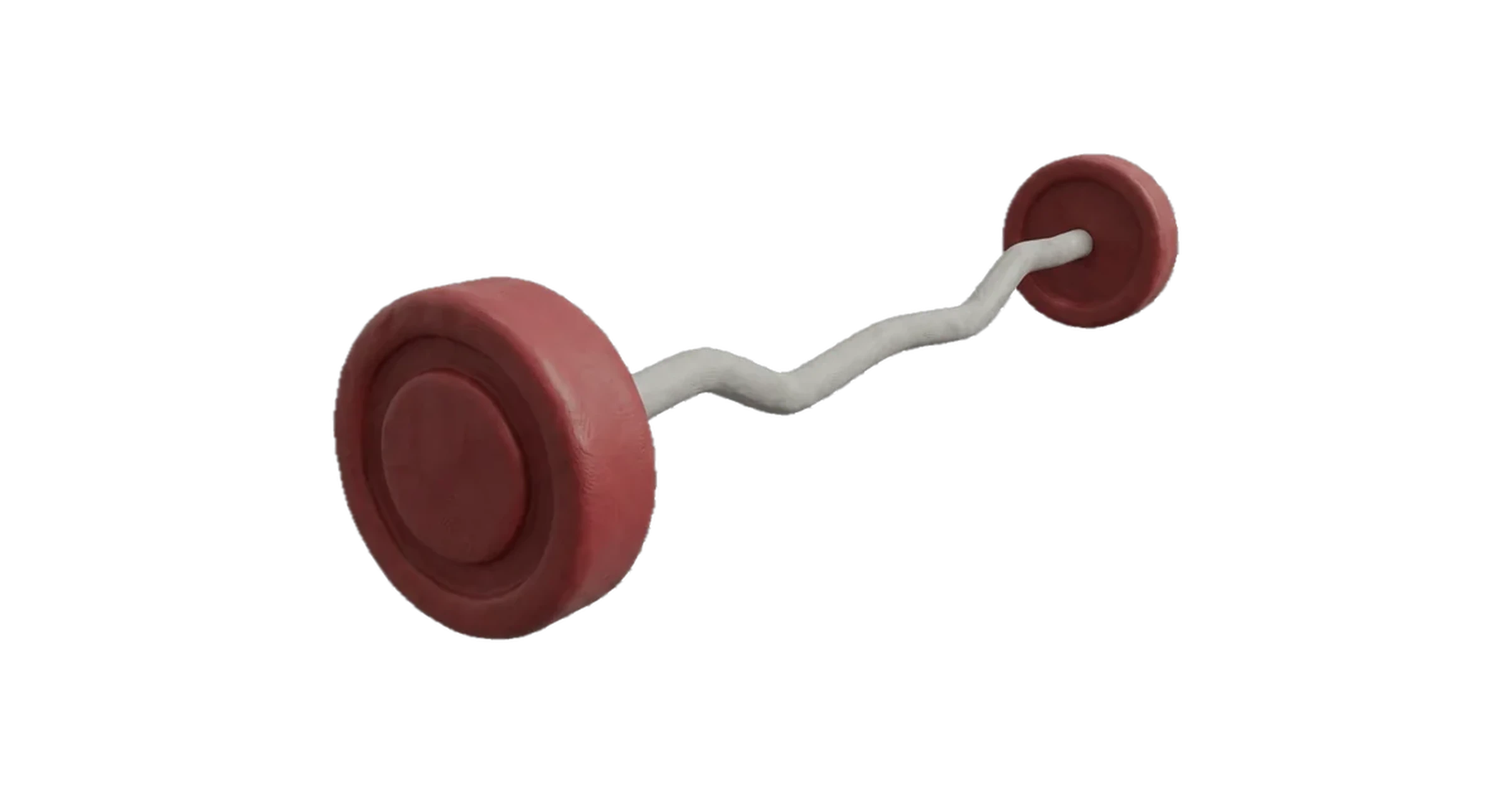
An EZ bar is a short barbell with two bends in the middle. The bends let you hold it with your palms angled slightly toward each other instead of facing straight up.
Use it for curls and triceps extensions, especially if a straight bar makes your wrists or elbows ache.
Most weigh 15 to 25 lb, but there is no standard, so check yours before you log a number.
What it is
Walk past the barbell rack and there is usually one bar that is shorter than the rest with a wavy section in the middle. That is the EZ bar. You will also see it called an EZ curl bar, a curl bar, or a cambered bar, and they all mean the same thing.
It takes standard plates on the ends like any other barbell, and it is normally 4 to 5 feet long rather than the 7 feet of an Olympic bar. Some gyms keep a rack of fixed weight ones instead, where the plates are welded on.
Why the bends are there
Hold a straight bar for a curl and your palms face directly up, which means your forearm bones are fully rotated. Hold that position under load for 10 reps and a lot of people feel it in the wrist or the inside of the elbow.
The bends let each hand sit at maybe 20 to 30 degrees of rotation instead of 90. Your wrist stays in a more neutral position and the strain drops.
If curls have never bothered your wrists, you are not missing anything by using a straight bar. The EZ bar solves a specific problem rather than being an upgrade.
How much it weighs
There is no standard, which surprises people. Common EZ bars land between 15 and 25 lb. Heavier ones exist, and some cheap ones are closer to 10.
The Olympic style ones with rotating sleeves and 2 inch ends are usually at the top of that range. The thinner standard ones with 1 inch ends are usually at the bottom.
Weigh it if you can, or ask at the desk. If neither is possible, assume 20 lb and use that number every session from then on.
Where to grip it
The zigzag gives you two or three natural hand positions, and they are not interchangeable.
The outer bends, closer to the plates. Wider grip, more rotation in the hands, closest to a straight bar. Hits the inner part of the biceps a little more.
The inner bends, closer to the middle. Narrower grip with your palms angled in further. This is the more comfortable one for most people and the one to start with.
Try both for a set each and use whichever your wrists prefer. Then stick with it, so your weights stay comparable week to week.
What to use it for
EZ bar curl. The main one. Same movement as a barbell curl, easier on the wrists. Keep your elbows near your sides and do not swing your back to get the last rep up.
Lying triceps extension, also called a skullcrusher. Lie on a bench, bar over your chest, bend at the elbows to bring it toward your forehead, then extend. The angled grip helps a lot here because the straight bar version is notorious for elbow ache.
Close grip press. Hands on the inner bends, press like a bench press with your elbows tucked. Mostly triceps.
Preacher curl, if your gym has the bench for it. The EZ bar is the standard choice for that machine and the pad removes any chance of swinging.
EZ bar, straight bar or dumbbells
Straight bar lets you load the most weight and keeps both hands doing exactly the same thing. Use it if it does not hurt.
EZ bar is the same exercise with a friendlier wrist position. Slightly less weight, considerably less complaining from your joints.
Dumbbells let each arm move independently and let you rotate your wrist through the rep. Best if one arm is noticeably stronger than the other, or if both bars bother you.
None of these is meaningfully better for building biceps. Pick the one you can do comfortably for the next 6 months and add weight to it.
Fixed weight EZ bars
Many gyms have a rack of pre loaded EZ bars, usually running from about 20 lb up to 60 or 70 lb in 10 lb steps.
The number painted on the bar is the total, so there is nothing to work out. That is the one case where the bar weight question does not apply.
The gap between them is the annoying part. Going from 30 to 40 lb is a 33% jump, which is a lot for a curl. If you are stuck between two, use the lighter one and add reps until the heavier one is manageable.
A free workout tracker for your phone
LiftCamp remembers every set you log, so next week it shows you what you lifted last time and you pick the weight in 2 seconds. Add it to your home screen and it opens like an app. No app store, no cost.
No card, no app store. Works in your browser.
More guides
- A beginner full-body workout, three days a weekTwo workouts, alternated. Four exercises each, about 45 minutes, and a plan for adding weight.
- How to pick your starting weightThe short version, then the details, for every kind of equipment in the gym.
- Progressive overload for beginners: how to do itWhat progressive overload is, why it works, and the reps-then-weight method for barbells, machines, dumbbells and bodyweight.